

What Type of light is best for my loft

Introduction
Lighting is one of the most powerful design tools in any home, but in a loft it takes on even greater importance. A loft is often defined by its architectural quirks: high or sloping ceilings, exposed beams, limited windows, or unusual layouts. These features make lofts stylish and characterful — but they can also make them tricky to illuminate properly.
The best type of light for your loft depends on how you use the space, its shape, and the atmosphere you want to create. For example, a loft bedroom benefits from warm, layered lighting for relaxation, while a loft office or studio requires bright, focused task lighting. The secret lies in combining different types of light — ambient, task, and accent — while paying attention to energy efficiency and design.
In this guide, we’ll explore the best types of lights for lofts, how to choose the right ones for your needs, and the common mistakes to avoid.
Why Loft Lighting Is Unique
Before looking at the best lighting options, it helps to understand what makes loft lighting different from other rooms.
High Ceilings
Many lofts have tall or vaulted ceilings. While this makes spaces feel open, it can leave lower areas dim if lighting isn’t carefully planned.
Sloping or Angled Walls
In converted attic lofts, angled ceilings can cast shadows and limit the use of traditional overhead lights.
Limited Natural Light
Some lofts have skylights, while others may have just one or two small windows. Artificial lighting often plays a larger role than in standard rooms.
Multi-Use Spaces
A loft can serve as a bedroom, study, living room, or creative studio — sometimes all at once. Each function needs different lighting.
Architectural Features
Exposed beams, brickwork, or ducting are common in lofts. Lighting should highlight these rather than fight against them.
The Three Core Types of Lighting
Every well-lit loft should balance three layers of lighting:
1. Ambient Lighting
This is the main source of illumination that lights up the entire space. In lofts, ambient lighting might come from ceiling fixtures, chandeliers, recessed lights, or large floor lamps. Its job is to make the space feel bright and usable.
2. Task Lighting
Task lighting is more focused, helping with specific activities such as reading, studying, cooking, or working at a desk. Examples include desk lamps, under-cabinet lights, and adjustable sconces.
3. Accent Lighting
Accent lighting is about mood and design. It draws attention to architectural details, textures, or decorative objects. Examples include LED strip lights, wall sconces, and directional spotlights.
By combining these three types, your loft will feel balanced, functional, and visually appealing.
The Best Types of Light Fixtures for Lofts
1. Pendant Lights
Pendant lighting is a classic choice for lofts, particularly those with high ceilings.
Advantages:
Draws the eye upward, emphasizing the height of the room.
Provides strong, focused illumination.
Best Uses: Over dining tables, work areas, or in open living spaces.
Design Options:
Industrial-style pendants with exposed bulbs for urban lofts.
Minimalist glass pendants for a modern look.
Cluster pendants at varying heights to fill vertical space.
2. Chandeliers
Chandeliers bring drama and style to loft spaces.
Advantages:
Provides both functional light and a focal point.
Works well in large or central loft areas.
Best Uses: Stairwells, open-plan living spaces, or over seating areas.
Tip: Choose a modern chandelier for a sleek loft, or a rustic wood/iron chandelier for a converted barn loft.
3. Recessed Lighting
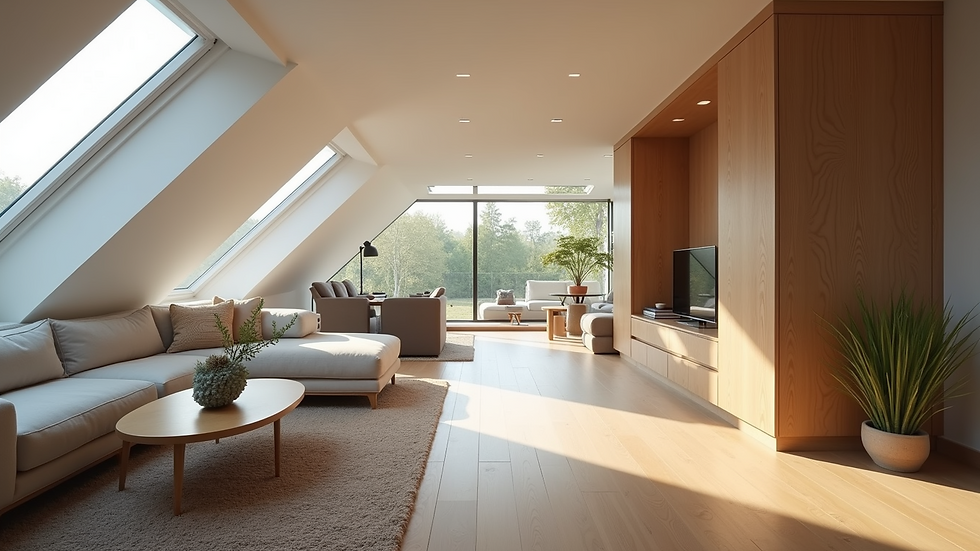
Recessed lights, also called downlights, are perfect for lofts with angled ceilings or where hanging fixtures aren’t practical.
Advantages:
Clean, unobtrusive design.
Provides even general lighting.
Best Uses: Bedrooms, offices, or low-ceilinged lofts.
Design Tip: Use dimmable LEDs so you can adjust brightness depending on the activity.
4. Track Lighting
Track lighting offers flexibility, making it ideal for lofts with irregular shapes or multipurpose layouts.
Advantages:
Directional heads let you highlight specific areas.
Works well for accent lighting or to spotlight artwork.
Best Uses: Studios, gallery-style walls, or open-plan lofts.
Style Note: A matte black track system blends seamlessly into industrial loft ceilings.
5. Wall Sconces
Wall-mounted lights save space while adding atmosphere.
Advantages:
Perfect for angled walls or awkward corners.
Creates soft pools of light without overwhelming the room.
Best Uses: Reading nooks, bedside lighting, or highlighting textured walls.
Design Tip: Swing-arm sconces are highly practical for loft bedrooms.
6. Floor Lamps
Floor lamps are versatile and portable, making them great for lofts where wiring might be limited.
Advantages:
Easy to reposition.
Adds height and balance to low-lit corners.
Best Uses: Next to sofas, reading chairs, or desks.
Style Note: Arc floor lamps can project light into the center of the room without needing ceiling fixtures.
7. Table Lamps
Though small, table lamps add warmth and usability.
Best Uses: Bedside tables, desks, or shelving.
Tip: Use smart bulbs so you can adjust brightness and color temperature easily.
8. LED Strip Lighting
LED strips have become a modern staple, offering both function and creativity.
Advantages:
Affordable, energy-efficient, and customizable in color.
Can highlight architectural features.
Best Uses: Under stairs, along beams, around skylights, or behind shelving.
9. Skylight & Integrated Window Lighting
Natural light is always the best light. If your loft has skylights, consider enhancing them with artificial lighting for nighttime.
Examples: LED strips around skylight frames, uplighting to mimic daylight.
Tip: Use light-filtering blinds to manage glare during the day.
10. Smart Lighting Systems
Smart lighting lets you control brightness, warmth, and even color with your phone or voice assistant.
Advantages:
Customizable zones for multipurpose lofts.
Energy-efficient and convenient.
Best Uses: Large lofts with several areas (living, working, sleeping).
Choosing Lights Based on Loft Function
The best type of light also depends on how you use your loft.
Loft Bedroom
Warm, soft lighting for relaxation.
Wall sconces, bedside lamps, and dimmable overhead lights.
Loft Office/Study
Bright, neutral task lighting.
Desk lamps, track lighting, and daylight LED bulbs.
Loft Living Room
Layered lighting for flexibility.
Pendant or chandelier for ambient, floor lamps for comfort, and accent lights for mood.
Loft Studio (art, music, or photography)
Bright, adjustable lighting.
Track lights, daylight bulbs, and movable lamps.
Loft Gym/Yoga Space
Even, bright ambient lighting.
Dimmable LEDs for relaxation modes.
Energy Efficiency Matters
Since lofts often rely heavily on artificial lighting, efficiency is key.
Use LED Bulbs: They last longer and consume less power.
Add Dimmers: Save energy and create mood.
Install Motion Sensors: Particularly useful for loft staircases or hallways.
Maximize Daylight: Use mirrors to reflect natural light and reduce the need for artificial illumination.
Common Loft Lighting Mistakes
Relying on One Overhead Light
This creates harsh shadows and leaves corners dark.
Ignoring Sloped Ceilings
Standard fixtures may look awkward or fail to provide coverage.
Overlooking Task Lighting
A loft used for working or studying needs more than just ambient light.
Choosing Style Over Function
A beautiful chandelier is wasted if it doesn’t light the space effectively.
Poor Switch Placement
Without planning zones, you may find yourself running across the room to adjust lights.
Conclusion
So, what type of light is best for your loft? The answer depends on your space, ceiling height, and lifestyle, but in most cases, the best approach is layered lighting. Combine ambient lighting (like pendants or recessed fixtures) with task lighting (desk lamps, sconces, or track systems) and accent lighting (LED strips, wall lights, or spotlights).
For loft bedrooms, soft, warm lighting works best. For offices or studios, bright, focused task lights are essential. In living spaces, the best choice is a flexible mix — a statement chandelier or pendant for drama, supplemented by floor lamps and subtle accent lights for mood.
Ultimately, the “best light” for your loft isn’t one fixture or bulb but the right combination that makes your loft both functional and beautiful.

Comments